Monday, December 17, 2012

Chinese Dynastic Cycle

The Chinese Dynastic Cycle: Timeline
http://www.netplaces.com/speaking-mandarin-chinese/an-overview-of-china/the-dynastic-cycle.htm


Dynasty
Time Period
Xià
2205–1765 b.c.e.
Shāng
1766–1066 b.c.e.
Zhóu
1066–256 b.c.e.
Qín
221–207 b.c.e.
Hàn
206 BCE–220 c.e.
Sān Guó
220–280 c.e.
Jìn
265–420 c.e.
Liù Cháo
420–589 c.e.
Suí
581–618 c.e.
Táng
618–907 c.e.
Wǔ Dài Shí Guó
907–960 c.e.
Sòng
960–1279 c.e.
Yuán
1271–1368 c.e.
Míng
1368–1644 c.e.
Qīng
1644–1911 c.e.

Over time, a long period of time, China has gone through many dynasties as shown above. 
The Dynastic Cycle: Flow Chart
http://regentsprep.org/Regents/global/themes/goldenages/IMAGES/dynasticcycle.gif

Above is how the Dynastic Cycle worked for the Chinese. This is the repetitive cycle that look place for many, many years in China as you can see from the numerous dynasties over time. 

Sunday, December 16, 2012

History


This is a short clip of a long documentary on China's history, past and present. In the first minute the video highlights some key facts about China that are expanded on later in the film.

Chinese Writing System

The Chinese writing system is one of the oldest know written languages.  Some of the earliest examples of ancient Chinese writing date back to over 4,000 years ago.  The Chinese writing system uses a logographic system.  This system consists of large Chinese symbols know as characters.  All characters are written in calligraphy.  China is an enormous country with two main languages: Mandarin and Cantonese.  These two languages have their own dialects.  Although the two languages pronounce words differently their written language is the same.


Timeline


This is a timeline of China's History that dates from 1700 BC to 1989.  It outlines the time periods when each dynasty ruled over China, when the time period of dynasties ended, and new government parties took over.  It also includes important key events in China's history like the Opium War and China's Cultural Revolution.

Wednesday, December 12, 2012

China and the Need For Social Media

 
A woman views the Chinese social media website Weibo at a cafe in Beijing on April 2, 2012 Social Media has become so prevelant in the United States, it's no wonder that other countries are following in our footsteps. China, with their mass political and social reform, have become dependent on social media, like Twitter and Facebook, themselves. However, the next generation of Chinese leaders does question if social media is harmful of helpful. The social media being used now by leaders has proven to be helpful; Facebbok is updated constantly of social issues, as well as spreading China's communist message to the people. In a country with over a billion people, how else can you get the news to  diffuse to everyone? 
     While their new dependency on social media seems like a step forward,some people fear that, instead, may be a step in the wrong direction. Social media began to present problems when limits were placed to prevent rumor mongering. Anyone who signed in on these sites were required to subscribe using their first names, which did arouse controversy. These laws were never really strictly enforced, but China's small understanding of social media is where the real problem lies. While developing and evolving rapidly into a more modern country like the United States, there is so much that a country of this size needs to learn, in order to avoid conflict between the government and the people.
 

The Chinese Revolution of 1949

Chinese communist leader Mao Zedong declared the creation of the People's Republic of China on October 1, 1949.  This declaration was so important because it ended the civil war between the Communist Party and the Nationalist Party.  The formation of the People's Republic of China was really what initiated the rebuild and strength of governmental challenges China was facing. 

Above, Mao Zedong 


Buddhism, Taoism, and Confucianism


http://www.youtube.com/watch?v=-gZY4i4Kg3s

Buddhism, Taoism and Confucianism are three of the oldest and most popular religions throughout China.  While Buddhism was discovered in India, Taoism and Confucianism were both founded in China. All three of these religions are based on ethics and moral principles designated to better a participants relationship with the universe. 

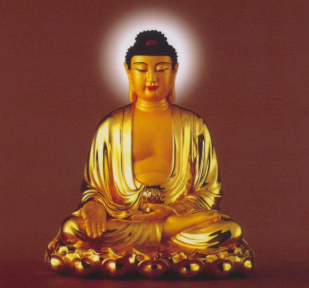
Buddhism: Was founded in 520 BCE and is to this day the most popular religion in the far east. Founded by and Indian prince, Siddharta Guatama, also known as "The Buddah".  Buddhism focuses on meditation and believes in Nirvana or rebirth. They practice the "Four Noble Truths" as well as "The Eightfold Path".

Taoism:  Taoism was founded in China and is also referred to as Daoism.  Taoism practices "The Way" or Dao, the ultimate truth to the universe. Chinese philosophers Laozi and Zhuangzi developed the principles of Taosim. 

Confucianism: Was developed in 500 B.C.E. in China.  It is often argued that Confucianism is a philosophy as opposed to a religion.  Confucianism is a way of life.  There are Five Cardinal Relationships in Confucianism:
  1. Sovereign-Subject
  2. Father-Son
  3. Elder-Younger Brother
  4. Husband-Wife
  5. Friend-Friend
They focus on Mercy, Social Order, and Fulfillment of Responsibilities. As well as "Li" or "The Proper Way" which is set of rules on how to interact with other people.